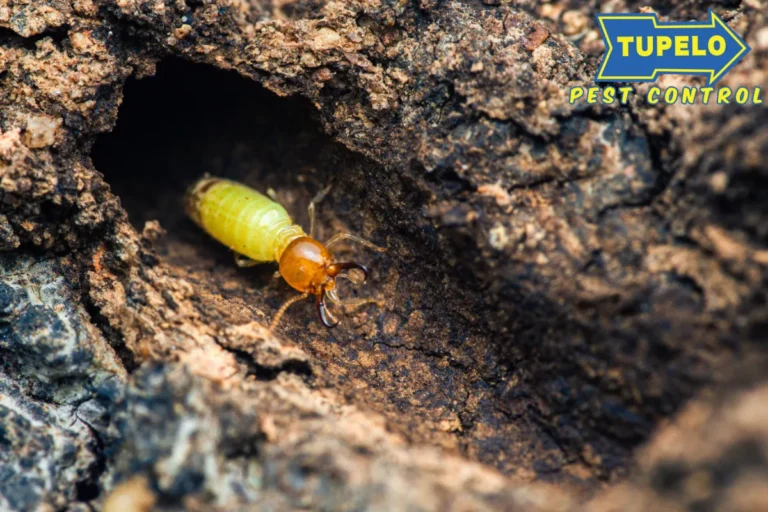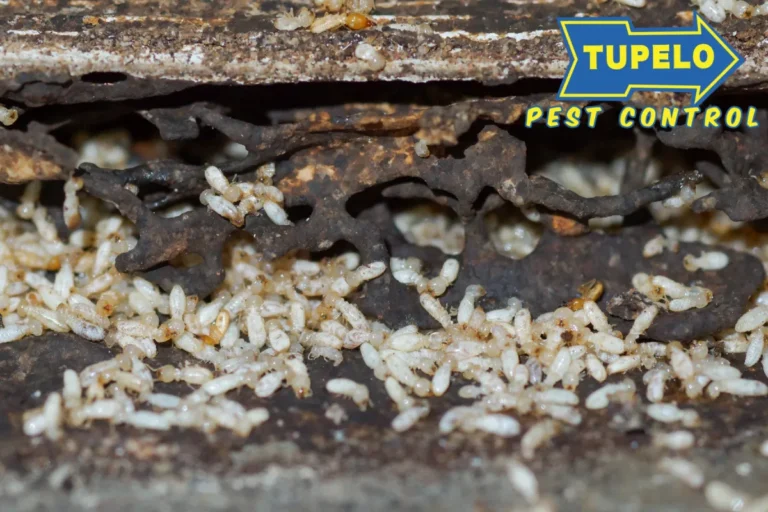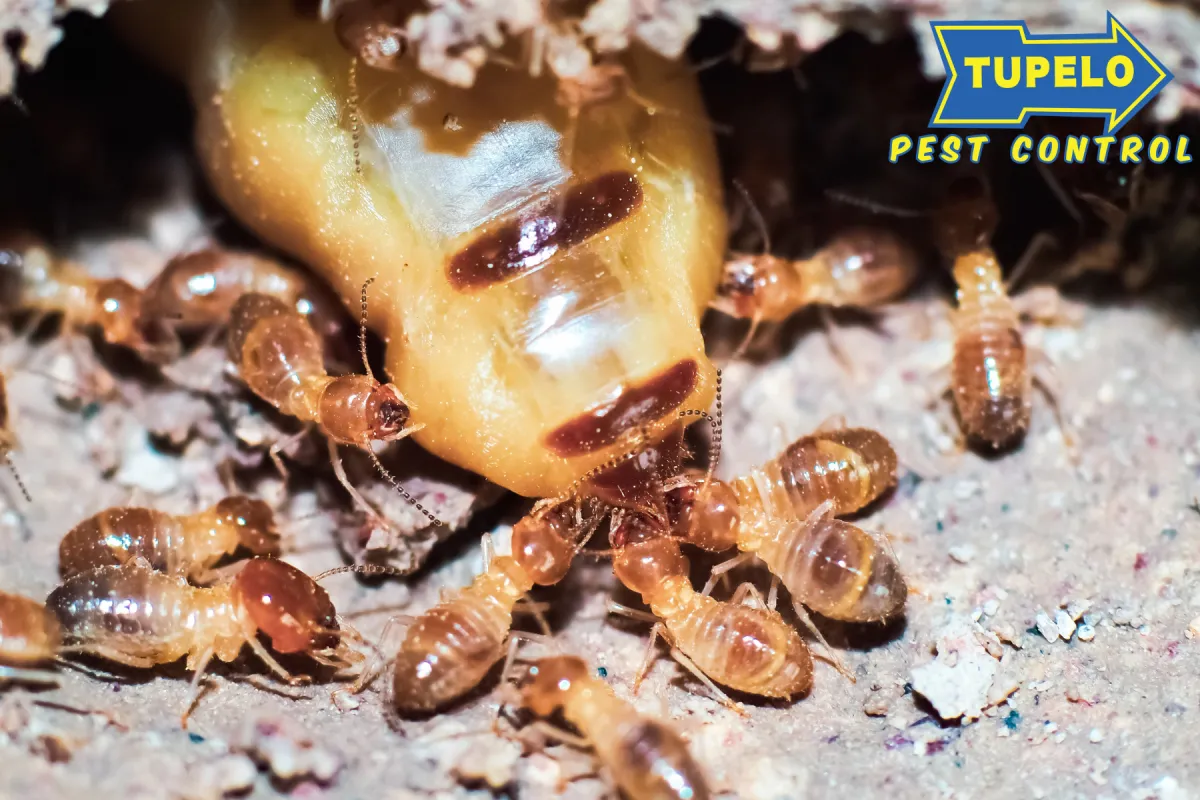
If you’re seeing pencil-width mud tubes running up your foundation, discarded insect wings on windowsills, or wood that sounds hollow when you tap it, those are the three clearest signs of termites in a Northeast Mississippi home. None of them are a guarantee, but any one of them is worth a free inspection before it turns into a repair bill.
We get calls almost every spring that start the same way: “I found these little bugs with wings by my window, and I don’t know what they are.” Nine times out of ten in Tupelo, Saltillo, and the surrounding towns, that’s a termite swarm, and it’s the single most common reason a homeowner in Northeast Mississippi picks up the phone about termites for the first time. Pest control in Mooreville, MS can help identify these warning signs early. Eastern subterranean termites are established across the whole region, and they don’t wait for you to notice them before they start working. Here’s what we actually look for on an inspection, in the order most people find it themselves.
1. Mud Tubes on Your Foundation, Piers, or Crawl Space
This is the sign we see most. Subterranean termites build pencil-width tubes of dirt and saliva to travel from the soil to the wood of your home without drying out in the open air, because dry air kills them. Look along your foundation wall, brick piers, and any wood-to-soil contact points like deck posts or porch steps. A fresh tube is damp and will re-form within a day or two if you break it open. According to the Mississippi State University Extension Service, mud tubes are one of the most reliable visible signs of an active subterranean termite colony.
2. Discarded Wings Near Windows and Doors
Termite swarmers (the reproductive termites that leave an established colony to start a new one) shed their wings almost immediately after landing. If you find small, uniform wings in a pile near a windowsill, door frame, or light fixture, especially after a warm, humid afternoon following a spring rain, that’s a swarm event, and it means a mature colony is close by. In our experience, late February through May is peak swarm season across Lee, Pontotoc, and Union counties.
3. Wood That Sounds Hollow or Feels Soft
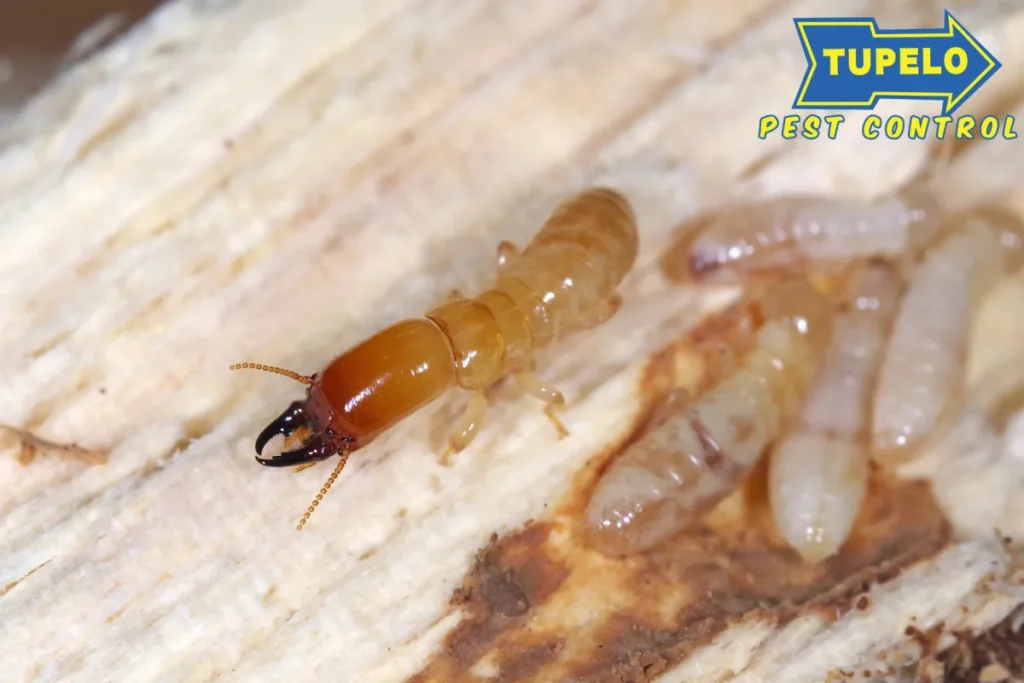
Termites eat wood from the inside out, following the grain and leaving a thin, undamaged-looking surface layer. Tap on exposed wood, baseboards, window frames, and porch posts with the handle of a screwdriver. A dull, hollow sound (instead of a solid knock) or wood that gives way under light pressure is worth a closer look. This is one of the signs homeowners in older Tupelo neighborhoods with original wood trim ask us about most.
4. Buckling Paint or Blistering Drywall
Moisture from termite activity can make paint bubble or drywall look water-damaged even when there’s no actual leak. If you’ve ruled out a plumbing issue and you’re still seeing bubbling paint or discolored drywall near the floor line, termites are worth ruling out too.
5. Frass (Termite Droppings) Near Wood
Drywood termites (less common here than subterranean termites, but not unheard of) leave behind small, pellet-like droppings that look a bit like sawdust or ground coffee, usually in small piles beneath infested wood.
6. Tight-Fitting Doors and Windows
As termites damage the wood framing around doors and windows, the wood can warp just enough that doors and windows start sticking. It’s an easy sign to write off as “the house settling,” so we always ask about it directly on an inspection.
7. Clicking Sounds in the Walls
This one surprises people. Soldier termites bang their heads against tunnel walls to signal danger to the colony, and in a quiet room, it’s sometimes just barely audible as a faint clicking or rustling sound inside the wall. It’s not common to notice, but homeowners who’ve heard it usually never forget it.
What to Do If You Spot One of These Signs
None of these signs on their own means you definitely have termites, and none of them means you definitely don’t. What we tell every homeowner who calls us with one of these signs is the same thing: don’t guess, and don’t wait. Pest control in Mooreville can help identify termite activity early, before the problem becomes more costly to address.
A termite colony left alone doesn’t slow down, and the earlier we catch it, the less it costs to fix. We run a free inspection, tell you honestly what we find (including if we find nothing), and if treatment makes sense, we explain how our Trelona bait-station system works before you decide anything. With Mooreville pest control, you get straightforward answers, no contracts, and no pressure, just what’s actually true about your house.
Frequently Asked Questions
What is the first sign of termites in a house?
The earliest sign most homeowners notice is a mud tube, a pencil-width tunnel of dirt running up a foundation wall, pier, or slab edge. Subterranean termites build these to travel between the soil and your home’s wood without drying out.
How do I know if a house has termites or just termite damage from before?
Fresh mud tubes with damp, packed dirt point to an active problem. If a tube is dry, crumbly, and empty when you break it open, it may be old, but that alone doesn’t rule out an active colony elsewhere on the structure. A licensed inspection is the only way to know for certain.
When do termites swarm in Mississippi?
Eastern subterranean termites, the species most common in Northeast Mississippi, typically swarm on warm, humid afternoons after a spring rain, most often from February through May.
Do termite swarmers mean my house already has damage?
Not necessarily. Swarmers are winged termites leaving an established colony to start a new one. Seeing them means a colony is nearby, sometimes in the soil and not yet inside your home, but a timely inspection can catch the problem before real structural damage sets in.
A Note From Us
We’re Andy and Jessica Long, and Tupelo Pest Control is a family business, not a franchise with a call center. We believe pest control should feel personal, straightforward, and focused on helping you understand the problem.
If you found one of these signs while reading this, call us today. We’ll walk you through what to look for and help you understand your options before we ever show up, with no obligation.