
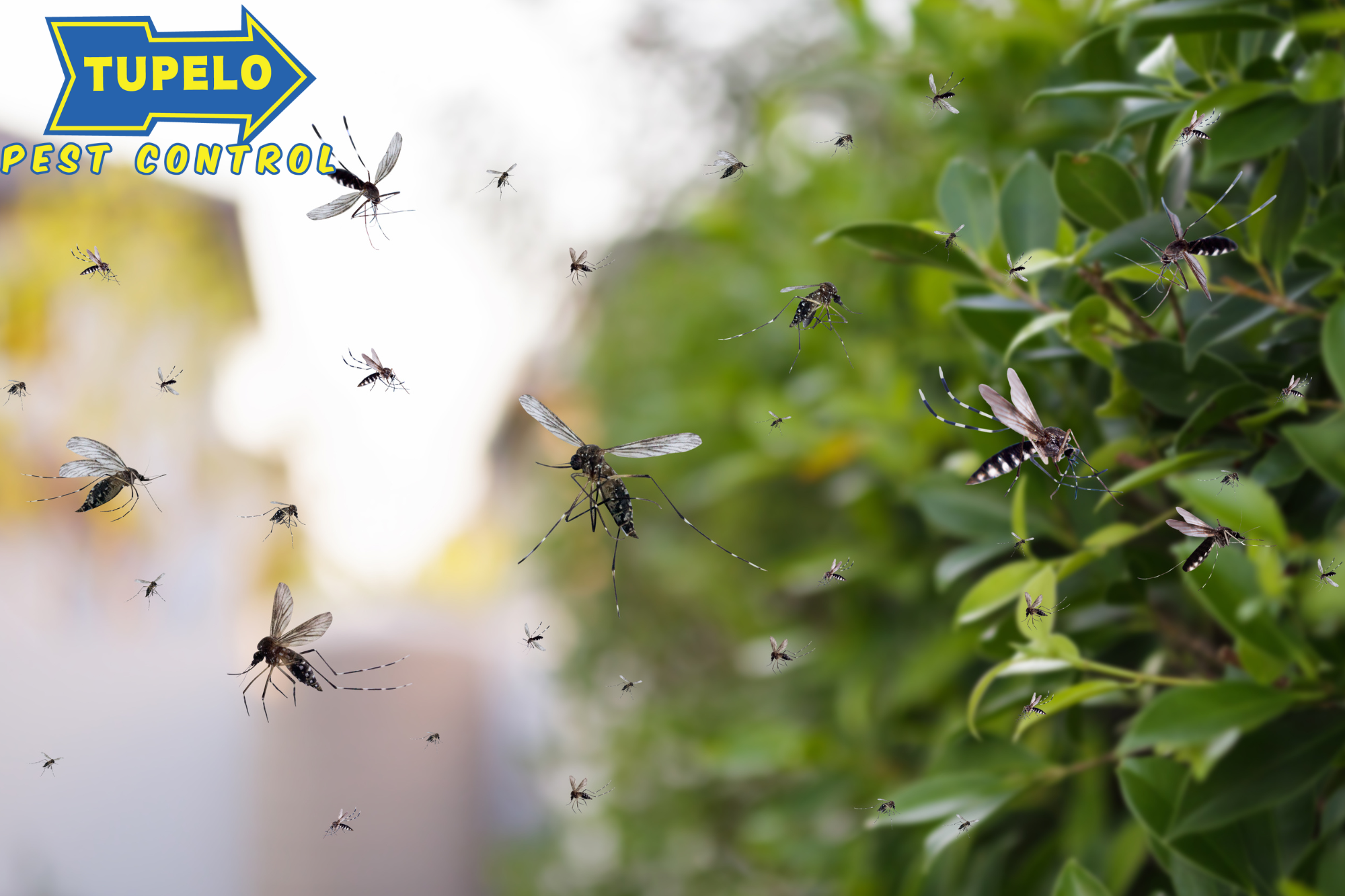
There is no single mosquito-control method that works equally well for every property. The right approach depends on where mosquitoes are breeding, how much activity you are experiencing, and whether you need temporary bite reduction or broader population control. Source reduction, targeted treatments, mosquito traps, and professional services each have different purposes and limitations.
Why Is Mosquito Control Difficult?
Mosquitoes can be difficult to manage because their life cycle takes place in different environments. Immature mosquitoes develop in water, while adults spend time resting and feeding around vegetation, structures, and other sheltered areas.
A property may also have multiple potential breeding locations. Containers, clogged gutters, drainage areas, plant saucers, buckets, and other objects that collect water can provide suitable habitat depending on the mosquito species and conditions.
Rainfall can create new breeding sites quickly, while vegetation and shaded areas can provide resting locations for adult mosquitoes.
This means eliminating one visible source does not necessarily eliminate all mosquito activity.
What Is the Best Way to Control Mosquitoes?
The most useful approach is usually to combine measures that address different parts of the mosquito problem.
Start by reducing breeding opportunities. Then consider whether additional measures, such as traps or targeted treatments, are appropriate for the property.
A simple framework is:
- Source reduction: Removes or manages places where mosquitoes can develop.
- Personal protection: Helps reduce bites to people.
- Mosquito traps: Capture adult mosquitoes under appropriate conditions.
- Targeted treatments: Reduce mosquito activity in treated areas.
- Professional control: Provides property assessment and a structured approach when mosquito activity is persistent or difficult to manage.
The best option depends on the property’s conditions rather than on one universally superior product or technique.
How Does Removing Standing Water Help?
Source reduction is one of the most important parts of mosquito management because mosquitoes require water to complete their immature stages.
Inspect your property regularly for objects or areas that can collect water, including:
- Birdbaths
- Plant saucers
- Buckets
- Children’s toys
- Containers
- Clogged gutters
- Uncovered outdoor equipment
- Low areas where water collects
- Debris that holds rainwater
Empty or manage water-holding items according to their use and condition. Gutters and drainage areas should also be maintained so they do not unnecessarily retain water.
Some breeding sites may be difficult to eliminate, such as permanent water features or drainage structures. These situations may require a different management approach.
Do DIY Mosquito Treatments Work?
DIY mosquito-control products can provide useful control in certain situations, but their effectiveness depends on the product, how it is used, environmental conditions, and the mosquito species involved.
Homeowners may encounter products designed for different purposes, including treatments intended for specific outdoor areas or products used to manage mosquito larvae.
Before using any pesticide, read and follow the product label, including instructions about application, protective measures, treated areas, and restrictions involving people, pets, water, or food.
DIY treatment should also not replace source reduction. If mosquitoes continue to have access to suitable breeding areas, treating adult mosquitoes may provide only temporary relief.
Do Mosquito Traps Really Work?
Mosquito traps are designed to attract and capture adult mosquitoes. Depending on the type of trap, attraction may involve combinations of light, carbon dioxide, heat, odor cues, or other mechanisms.
Their performance can vary considerably based on:
- Trap design
- Placement
- Mosquito species
- Weather conditions
- Competing attractants
- Local mosquito density
- Property layout
A trap may capture mosquitoes without eliminating the breeding sources producing new adults.
For that reason, traps are better viewed as one tool within a broader mosquito-management strategy rather than a guaranteed solution for an entire property.
When Does a Mosquito Trap Make Sense?
A trap may be worth considering when you want to capture adult mosquitoes in a particular outdoor area and are prepared to maintain the equipment according to the manufacturer’s instructions.
Placement matters. A trap positioned in an unsuitable location may not perform as expected because mosquitoes have access to many other environmental cues.
Traps can also be useful as part of an overall strategy that includes eliminating standing water and reducing conditions that support mosquito activity.
However, if mosquito numbers remain high, the presence of a trap does not necessarily indicate that the underlying source has been addressed.
Are Mosquito Traps Better Than Mosquito Treatments?
Not necessarily. They address the problem differently.
A trap attempts to attract and capture adult mosquitoes, while a mosquito treatment is generally intended to reduce mosquitoes in a defined treated area.
The better choice depends on what you are trying to accomplish.
| Method | Primary purpose | Main limitation |
|---|---|---|
| Source reduction | Reduce breeding opportunities | Some water sources are difficult to eliminate |
| Mosquito traps | Capture adult mosquitoes | Does not necessarily address breeding sites |
| Targeted treatment | Reduce mosquito activity in treated areas | Effectiveness and duration can vary |
| Personal repellent | Reduce bites to an individual | Does not reduce the property-wide mosquito population |
| Professional control | Assess and manage multiple contributing factors | Requires professional service and property assessment |
Using the right method for the actual problem is more important than choosing a method simply because it is marketed as the “best.”
How Do Professional Mosquito Treatments Work?
Professional mosquito-control services can involve evaluating the property to identify conditions that may contribute to mosquito activity and determining which control measures are appropriate.
Depending on the property and service, management may involve:
- Identifying potential breeding areas
- Evaluating vegetation and shaded resting areas
- Looking for areas where water accumulates
- Assessing conditions around the structure
- Applying appropriate treatments to targeted areas
- Recommending source-reduction measures
- Monitoring conditions over time
Professional treatment does not mean every mosquito on or around a property will be eliminated. Mosquitoes can continue to enter from surrounding areas, and new breeding sites can develop after rainfall or changes in outdoor conditions.
For homeowners considering pest control in Blue Springs, a property assessment can help determine whether mosquito activity is related to conditions on the property, nearby breeding sources, or a combination of factors.
How Long Does Mosquito Treatment Last?
There is no universal duration for mosquito treatment.
How long control lasts can depend on factors such as:
- The product used
- Application conditions
- Rainfall
- Irrigation
- Vegetation
- Temperature
- Mosquito pressure
- New breeding activity
Because these conditions can change, a treatment that reduces mosquito activity at one point in time may not provide the same level of control indefinitely.
Instead of assuming a fixed treatment duration, evaluate whether mosquito activity returns and whether new breeding conditions have developed.
Why Do Mosquitoes Come Back After Treatment?
Mosquitoes can return when new adults emerge from breeding sites or enter the property from surrounding areas.
Common reasons include:
- Rain creating new water-holding areas
- Untreated breeding sites
- Water collecting in containers or gutters
- Vegetation providing suitable resting areas
- Mosquitoes entering from neighboring properties
- Environmental conditions changing after treatment
This is why source reduction remains important even when treatments are being used.
If activity repeatedly returns, homeowners may benefit from evaluating the property again rather than simply repeating the same control method.
What About Mosquito Larvae?
Adult mosquitoes are not the only stage that can be addressed.
Mosquito larvae develop in water, so identifying and managing suitable water sources can interrupt development before adult mosquitoes emerge.
Some products are specifically designed for larval mosquito control in appropriate water habitats. One example is Bti, a biological larvicide used against mosquito larvae in suitable breeding environments.
However, not every water source should automatically be treated. The appropriate approach depends on the type of water, whether it can be eliminated, the product label, and the surrounding circumstances.
Do Mosquito-Repelling Plants Control Mosquitoes?
Plants such as lavender, basil, and citronella are sometimes promoted as natural mosquito-control solutions.
Simply growing these plants around a property should not be treated as a dependable way to control an established mosquito population.
Mosquito management is more effectively approached by identifying breeding conditions and using appropriate control measures for the property.
Plants can still be part of landscaping, but they should not replace practical source reduction or other appropriate mosquito-control methods.
Can Outdoor Fans Reduce Mosquito Bites?
Outdoor fans may help make certain areas less favorable for mosquito flight because moving air can interfere with their ability to fly and locate people.
This can be useful around patios, porches, or other specific areas where people spend time.
However, fans are primarily a bite-reduction measure, not a method for reducing the overall mosquito population on a property.
Use them as a supplementary measure rather than as a replacement for source reduction or appropriate mosquito control.
When Should You Consider Professional Mosquito Control?
Professional help may be worth considering when mosquito activity remains persistent despite reasonable source-reduction efforts.
You may also want professional assistance when:
- You cannot identify the source of mosquito activity
- Multiple areas of the property have mosquito activity
- Breeding sites are difficult to access
- Mosquitoes return repeatedly after DIY measures
- Outdoor areas are difficult to use because of mosquito activity
- You need help determining which control measures are appropriate
Professional pest control in Blue Springs, MS can provide a property-specific assessment rather than relying on a single generalized mosquito-control method.
What Should You Expect From a Professional Assessment?
A useful mosquito assessment should focus on understanding the conditions contributing to activity.
The inspection may consider:
Water Sources
Professionals can look for visible and less obvious areas where water may collect and support mosquito development.
Vegetation and Resting Areas
Dense vegetation, shaded locations, and other sheltered areas can provide places where adult mosquitoes rest.
Property Layout
The location of patios, yards, drainage areas, structures, landscaping, and neighboring conditions can affect how mosquito activity is distributed.
Existing Control Measures
If you have already used traps, treatments, or other prevention methods, explaining what you tried can help identify why the results may have been limited.
This type of assessment can help determine whether additional source reduction, targeted treatment, monitoring, or another approach is appropriate.
How Can You Choose the Right Mosquito Control Method?
Instead of asking which method is universally best, consider what problem you are trying to solve.
If you have obvious breeding sites:
Start with source reduction. Remove or manage water-holding containers and address drainage or maintenance issues where practical.
If you want to reduce adult mosquitoes in a specific outdoor area:
A properly selected and maintained trap may be one option, although results can vary.
If you need temporary reduction in mosquito activity:
A targeted treatment may be appropriate depending on the property and product.
If activity keeps returning:
Look for new or overlooked breeding sources rather than assuming the previous method has failed by itself.
If the source is difficult to identify or activity is persistent:
A professional assessment can help determine what conditions are contributing to the problem.
For property owners researching Blue Springs pest control, the most useful first step is to determine whether the problem is primarily related to breeding conditions, adult mosquito activity, or both.
What Can You Do to Reduce Mosquitoes Around Your Property?
A practical prevention routine can make your property less favorable to mosquito activity.
Regularly:
- Empty unnecessary containers that collect rainwater
- Maintain gutters and drainage systems
- Replace or manage standing water in outdoor items
- Keep outdoor areas free of unnecessary debris
- Check plant saucers and other containers
- Maintain vegetation around frequently used outdoor spaces
- Inspect after periods of heavy rainfall
- Use personal protection when mosquitoes are active
- Monitor areas where mosquitoes repeatedly appear
These steps are most useful when performed consistently. A property that is clear of standing water today may develop new breeding sites after the next rainfall.

Frequently Asked Questions
Do mosquito traps really work?
Mosquito traps can capture adult mosquitoes, but their performance varies according to trap design, placement, mosquito species, environmental conditions, and other factors. They should not be treated as a guaranteed solution for an entire property.
Are mosquito traps better than mosquito treatments?
Neither is universally better. Traps capture adult mosquitoes, while treatments are designed to reduce mosquito activity in targeted areas. The appropriate option depends on the property’s conditions and the type of control needed.
How long does mosquito treatment last?
Treatment duration varies depending on the product, application conditions, weather, rainfall, vegetation, and mosquito pressure. There is no universal treatment duration that applies to every property.
Can you control mosquitoes without professional treatment?
Some mosquito problems can be reduced through source reduction and other homeowner measures. Persistent or difficult-to-diagnose activity may require professional assessment.
Why do mosquitoes come back after treatment?
New breeding sites, rainfall, untreated water sources, changing environmental conditions, or mosquitoes entering from surrounding areas can contribute to renewed activity.
What is the best way to reduce mosquitoes around a yard?
Start by identifying and managing water sources where mosquitoes can develop. Then consider other measures based on the property’s conditions and the level of adult mosquito activity.
When should I consider professional mosquito control?
Professional assistance may be useful when mosquito activity remains persistent, breeding sources are difficult to identify, or DIY measures have not provided adequate results.
Conclusion
Effective mosquito control is usually less about finding one perfect product and more about matching the control method to the conditions creating the problem. Removing breeding opportunities, monitoring activity, and using appropriate treatments or traps can each play a role.
When mosquito activity persists, identifying the underlying source can help determine whether additional control measures are needed.
Get Help With Persistent Mosquito Activity
If mosquitoes continue to interfere with your outdoor spaces despite reasonable prevention efforts, Tupelo Pest Control can assess the conditions contributing to the problem and discuss appropriate control options.
Contact us today to learn more about mosquito-control services for your property.